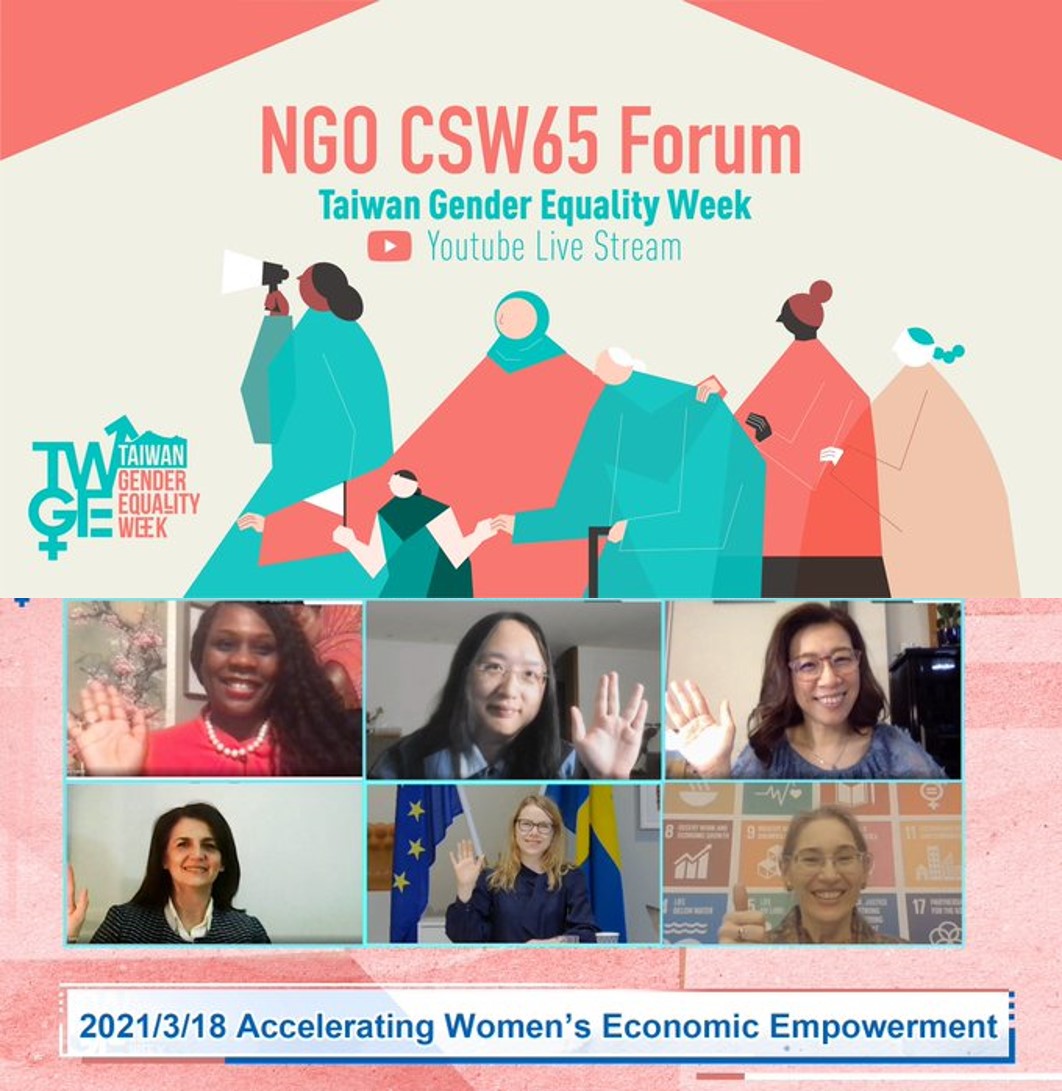
In conjunction with UN’s 65th session of the Commission on the Status of Women (CSW65, March 15-26), Taiwan’s Ministry of Foreign Affairs and Taiwan’s Foundation of Women’s Rights Promotion and Development (FWRPD) have been coordinating a series of activities in March. Among those activities is an exclusive virtual forum “Accelerating Women’s Economic Empowerment” on March 18 that saw Taiwanese and Swedish minister-level officials with NGO leaders from the US and Europe sharing their views of promoting gender equality by means of women economic empowerment.
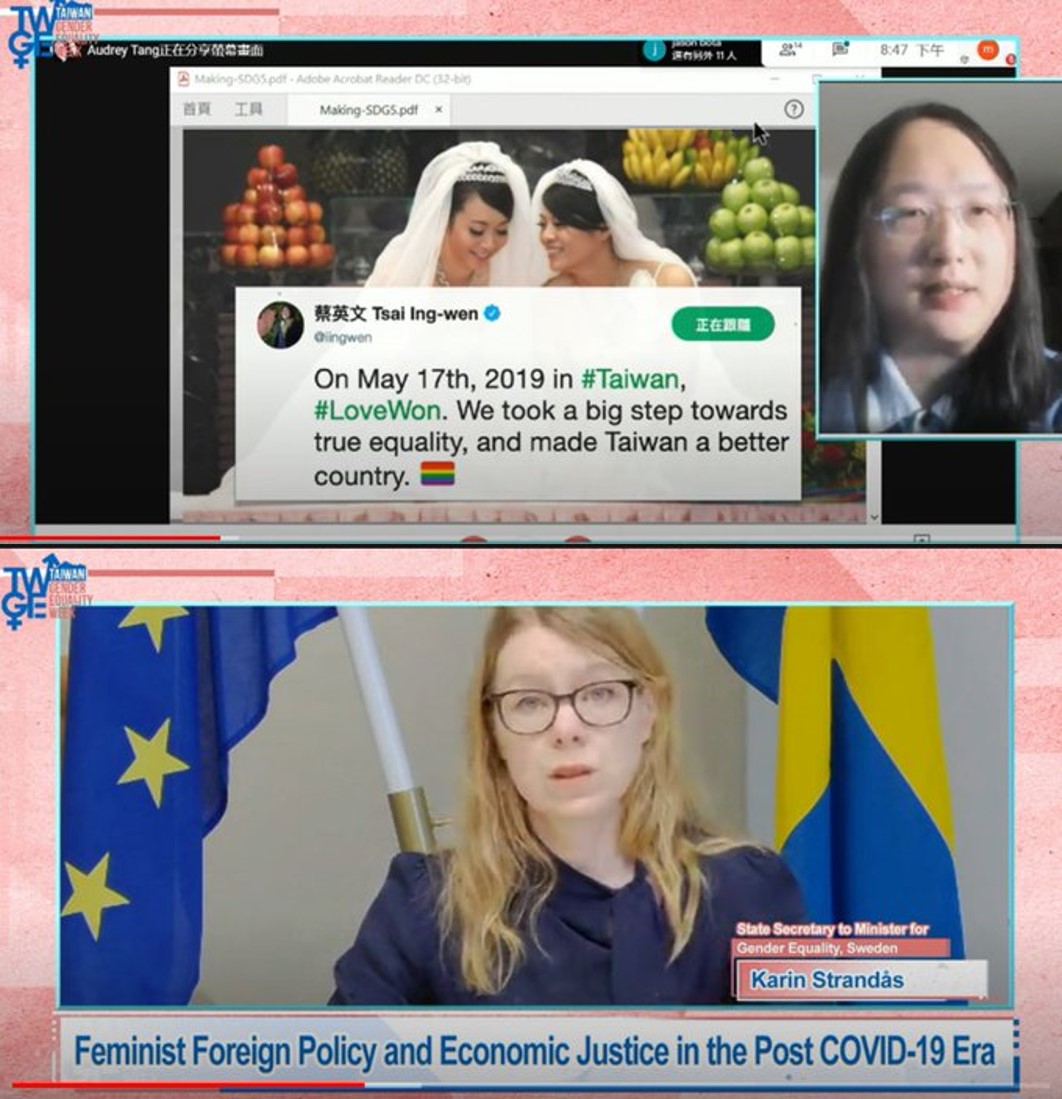
In her keynote speech, Taiwan’s Minister without Portfolio Audrey Tang explained the country’s plan to achieve Goal 5 of the SDGs on gender equality through social innovation and economic empowerment. As Taiwan’s first transgender government minister, Tang remarked “biology should not determine one’s destiny.” She proved it by shaping an Internet-based anti-Covid-19 approach that led Taiwan to successfully control the virus spread and increase both her and the island country’s international visibility.
Touching on economic justice in the post Covid-19 era, the other keynote speaker Karin Strandås, State Secretary to Minister for Gender Equality of Sweden, emphasized “economic gender equality means that women and men have the same opportunities to reach their full potential throughout their life cycle.” She suggests the governments should apply the aspect of gender equality into decision making, resources allocation and local policies, and "must make sure that budget allocation did not leave women behind."
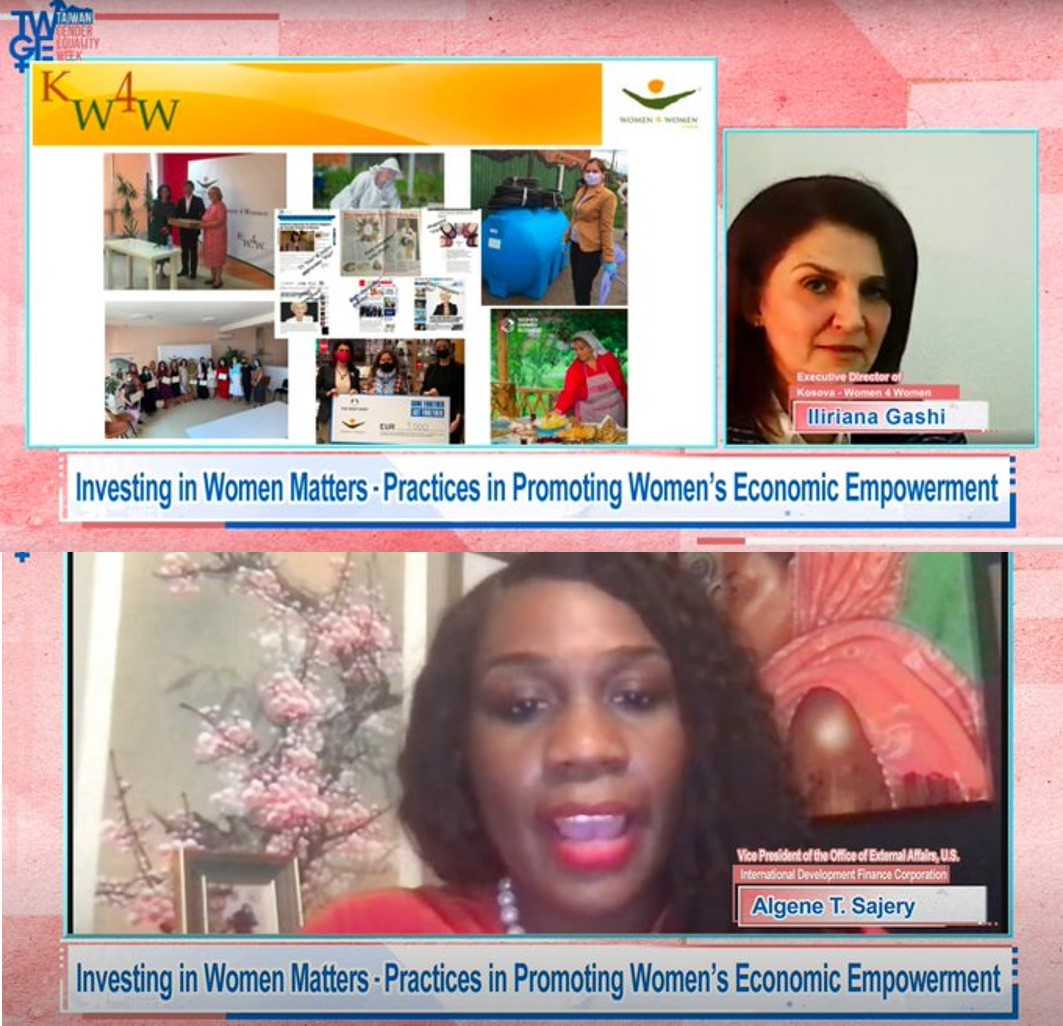
Themed on “Investing in Women Matters – Practices in Promoting Women’s Economic Empowerment,” the discussion session featured European and U.S. NGO representatives and private sector experts’ experiences in advancing women’s economic rights and independence, investing in women’s empowerment, and supporting marginalized women to earn, save money, and improve their health and wellbeing.
Dr. Iliriana Gashi, the director of Kosova Women for Women, introduced that her NGO have worked with the government to organize the payment of a minimal salary for women who lost jobs during the pandemic in the informal sector. She strongly believes that “giving the rights to women and more economic power in women's hands is good for men.” Algene T. Sajery, Vice President of the Office of External Affairs of U.S. International Development Finance Cooperation, followed, “to support women, we need to understand the specific challenge they faced. That’s why we train our investment officer on gender lens investing.” She emphasized that investing women means investing communities and sustainable development, too.
As a co-host of the virtual forum, Taiwan ranks first in Asia for gender equality, according to the Gender Equality Index, and has become the first Asian country to legalize same-sex marriage in 2019. This year, Taiwan is taking steps to expand the law to allow same-sex marriage between Taiwanese citizens and foreigners whose countries have not legalized same-sex marriage.
Taiwan’s Ambassador at Large Lin Ching-Yi, was invited to shed light on accelerating equality through gendered public policy making. At present, more than 40% of Taiwanese lawmakers are female, which is No.1 in Asia. “In Taiwan, we believe only more female participation in policy-making process can make the whole system accelerate to gender equality,” said the former legislator.
Held as part of the NGO forum to the UN’s CSW, there are over 20 other parallel sessions organized by Taiwanese NGOs during March 15-26. The active participation of friends around the world in the 3/18 virtual event showcases an international recognition of the advances Taiwan has made toward gender equality in recent years. Not only talk about “leave no one behind,” but make it happen, Taiwan’s relentless efforts along the SDGs path proves it a reliable partner and a good angel to deliver equality and empowerment of women.