


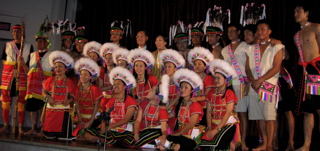
Taiwan’s own Formosa Aboriginal Song & Dance Troupe performed in front of an enthusiastic sold-out audience October 9 at the Smithsonian Institution’s Freer Gallery of Art in Washington D.C.
Taiwan’s own Formosa Aboriginal Song & Dance Troupe performed in front of an enthusiastic sold-out audience October 9 at the Smithsonian Institution’s Freer Gallery of Art in Washington D.C.
The troupe, made up of members of Taiwan’s various indigenous tribes, opened the show with a haunting a-capella rendition of a Puyuma women’s song, followed by a series of songs and dances from the Bunun people of Taiwan’s Central Mountain Range. The second part of the show focused on the music and dances of Taiwan’s largest aboriginal tribe, the Amis. Save for a mouth-harp solo, the performance featured no musical instruments and relied solely on the troupe members voices and the percussion of stomping feet.
Co-sponsored by the Taipei Economic and Cultural Representative Office (TECRO), the troupe’s performance drew an audience that packed the Freer Gallery’s Meyer Auditorium. TECRO Representative Dr. David Tawei Lee opened the show, welcoming the audience to explore a little-known yet rich facet of Taiwan’s society. After the performance, the performers took questions from the audience about their musical training and Taiwan’s Austronesian heritage.
The Formosa Aboriginal Song & Dance Troupe was formed in 1992 by a group of indigenous people committed to saving their cultures’ traditions and disseminating them with the outside world. The troupe has also performed in Berlin, London, and New York to glowing reviews.
