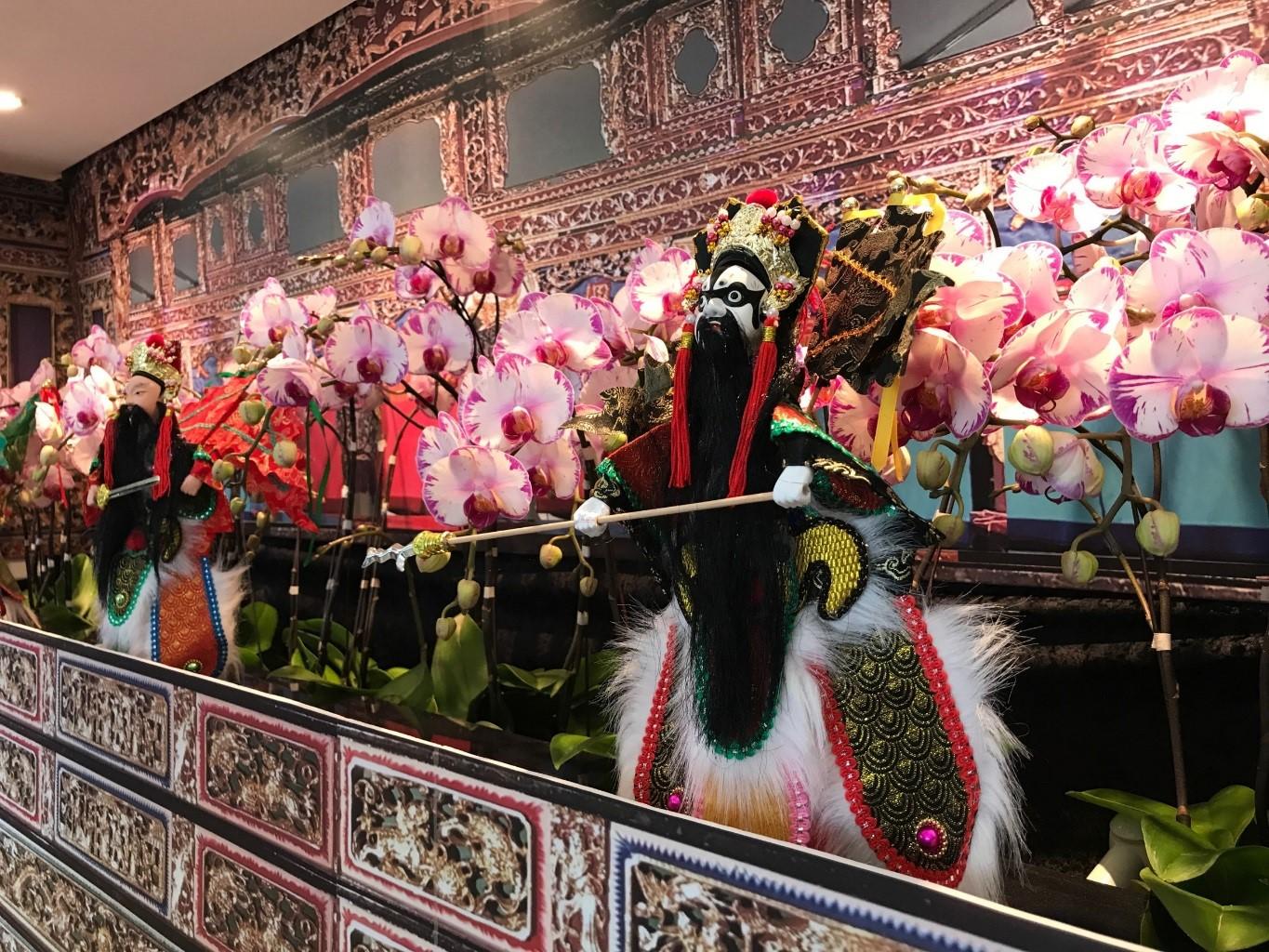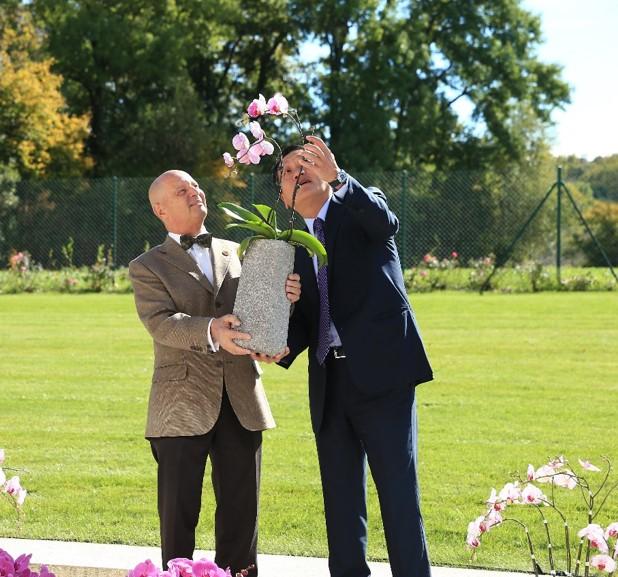
On October the 9th and 12th when our Mission held the Taiwan Orchids Exhibition, Ambassador Cyrus Chu gave a brief introduction which is very well received by audience. The following is a summary of the content, removing the beginning and ending remarks.
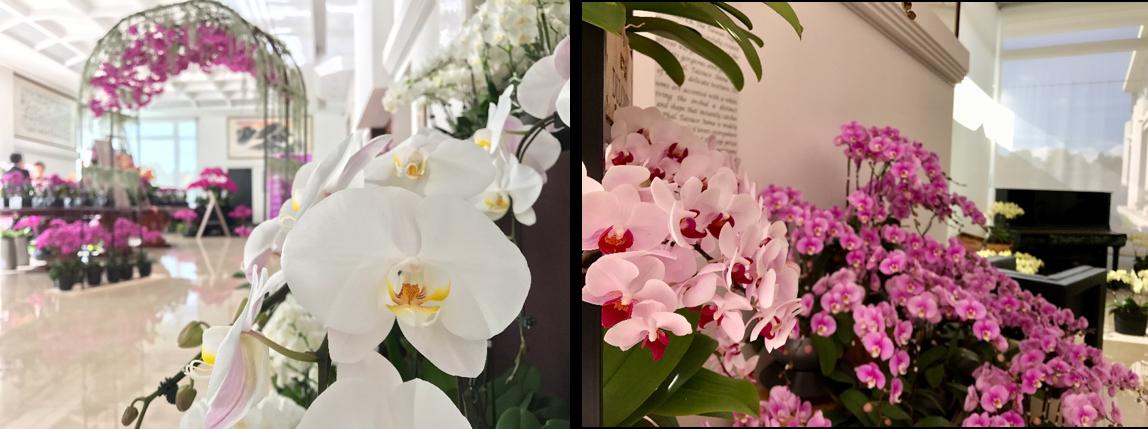
Together with the Taiwan Sugar Corporation and the Taiwan Orchid Growers Association, my Mission has the great pleasure of presenting to you here these 2,200 amazingly beautiful Phalaenopsis Orchids. All the seedlings for these orchids have been bred and cultivated for most of their lifespan in Taiwan, then shipped to the nursery near Paris to allow them to fully blossom over the last three months. They have been transported to Geneva in the last few days, where their beauty shines just for you today. I can assure you that this is by far the largest and most comprehensive exhibition of Taiwanese orchids ever seen in Europe.
Some of you may be curious about the orchids' generic name of "Phalaenopsis". It comes from the combination of two Greek words, phalaeo meaning "butterfly", and opsis meaning "appearance". In Taiwan, we simply call them "butterfly orchids". In English, they are sometimes called "moth orchids". Maybe you can decide with your own eyes - butterfly or moth? Which is the better metaphor?
Taiwan has long enjoyed the reputation of being the "Kingdom of Orchids”, or the “Kingdom of the Phalaenopsis Orchid”, at least. According to the register of the Royal Horticultural Society of Great Britain, there are 32,761 varieties of Phalaenopsis worldwide. Of these, 20,906 (which is 64%, or nearly two-thirds) can trace their parental line back to the Phalaenopsis equestris, one of Taiwan's 23 native species of Phalaenopsis . Another Taiwan native species, the Phalaenopsis amabilis, is also an important genetic source for almost all the white-flower orchid hybrids around the world. In this regard, I think we can safely say that almost every Phalaenopsis on this earth may have one Taiwanese grandmother or great-grandmother in its family tree, if not two.
To get back to trade, unfortunately, since we are the Mission to the World "Trade" Organization, the Orchid, and the Phalaenopsis in particular, is Taiwan's most important floriculture product for export. In the first 8 months of this year (2017) for example, Taiwan's exports of all floriculture products, of which 92% were orchids, reached a total value of 172 million US dollars - and more than half of the orchids exported were Phalaenopsis. It is, without doubt, our flagship industry!
More importantly, compared with any other type of trade in agriculture, the orchid trade is probably the most perfect example of the so-called "global value chain", in the way that it reflects all the advantages of international economic integration.
Given its extreme delicacy, a blooming orchid can hardly endure the experience of long-distance transportation. Most of Taiwan's orchids, therefore, are exported in the form of seedlings, of various sizes. These seedlings will be shipped to orchid nurseries in the importing countries to let them reach their full blossom. In other words, the supply process is like a long-distance relay, in which players far apart from each other take care of the different stages of cultivation, which may take up to 4 years.
The successful completion of the relay over such long distances relies on several key elements. For example, lower tariff rates on the seedlings of floriculture products, science-based and transparent phytosanitary requirements, and a well-conducted system of breeders' rights protection. You will recognize that all of these are the reasons why we are here. We cherish the beauty, the elegance and the delicacy of the orchid flowers, just as we cherish the openness and the liberty of the multilateral trading system that we and our predecessors have been working so hard to establish and maintain.